
ICM GmbH • Falknerstrasse 4 • 4001 Basel     DE  FR
➜Book first visit online
ICM Institute for Chinese Medicine, acupuncture basel, chinese medicine basel,tui na Basel, TCM Basel
  • Treatment Modalities
    • Acupuncture
    • TCM
  • Health Conditions
    • Pregnancy, Fertility
    • Migraine/ Headache
    • Joint and Back pain
    • Digestive Issues
    • WHO Indication list
  • Team
  • Information
    • Health Insurance Coverage >
      • FAQ
  • Contact
  • Treatment Modalities
    • Acupuncture
    • TCM
  • Health Conditions
    • Pregnancy, Fertility
    • Migraine/ Headache
    • Joint and Back pain
    • Digestive Issues
    • WHO Indication list
  • Team
  • Information
    • Health Insurance Coverage >
      • FAQ
  • Contact


THE BLOG ABOUT HERBS, HEALTH AND LIFE FROM A CHINESE MEDICAL PERSPECTIVE

Hóng Zǎo : Red Is The Color

15/1/2026

0 Comments

 
Picture

The color red is considered very auspicious to the Chinese. During the Chinese New Year, which will be coming up on the new moon in mid-February this year, many things are red – red dress, red decoration, red cakes, etc. These are viewed as bringers of luck, prosperity and success. Not only do the Chinese dress in the color red during the new year celebrations but also during weddings, both bride and groom; this is to symbolize joy, happiness and a fruitful union. It is also common to place Chinese Red Dates, along with peanuts, longans and lotus seeds on the bridal bed, as a salutation of fruitfulness. These Dates are also often gifted by the Chinese to a person as a symbol of wishing one health and vitality in life.

In the Chinese Materia Medica the herb Fructus Zizyphus Jujubae, Hóng Zǎo  紅 棗 is also known as the Chinese Red Date. Sometimes it is called Big Date,  Dà Zǎo 大 棗. These fruits are not the same as the dates we know from our regular grocery stores in Switzerland, which are palm dates. Hóng Zǎo actually looks red (as the image above) or so dark that they are almost black, mostly dried and are used in soups, teas or alcohols, made into paste for sweet cakes and used in Chinese Herbal Medicine. Its flavor is sweet and its temperature neutral. Most times when an herb is sweet, it is used for tonification. It enters the channels of the Spleen and Stomach. It is a food-grade herb, which means it can be consumed very regularly as food. As such, it makes sense that it enters the Spleen and Stomach channels, as these organs are like the power-generators for our bodies; they digest our food and create vital substance to maintain life. Hóng Zǎo nourishes both Qi and Blood in the body and calms the Spirit. But its true power is in its ability to support, moderate and harmonize the effects of harsh herbs in an herbal formula. For instance, if a formula were to be on a bitter side, which is often the case with expellant ones that would have anti-bacterial or anti-viral capabilities, an herb like Hóng Zǎo would be added to moderate the flavor as well as neutralize the coldness of these herbs. This would make the formula more easily acceptable to the taste and digestibility of the body.

As Mary Poppins sang, “Just a spoon full of sugar, helps the medicine go down…” - Hóng Zǎo does that too. The Chinese view sweet medicine also as medicine, not just bitter ones and they put it into the medicinal formula directly, to create balance. No need for a spoon full of sugar when you have Hóng Zǎo.


Image by SW Yang on Pixabay
0 Comments

We Didn't Start the Fire - But We Sure Are Fueling It

14/9/2025

0 Comments

 
Picture

About a month ago, we were still in the throes of Summer. It got up to 35 degrees Celsius  even in August, which is unusual for us here in Switzerland. But this has become the norm all over the world. We are in the midst of big change, of our Earth overheating but it is not new; the heating and cooling of the Earth has been happening for 4.54 billion years but us humans are sure contributing large amounts to the current overheating in a short amount of time by how we choose to live.

Not so far back in the past, in 1989, the American singer, Billy Joel released a song – “We Didn’t Start the Fire.” In this song, he lists some of the events in world history from his birth year, 1949, till that year when he turned 40; he released the song in September 1989. Little did he know that in November of that year, the Berlin Wall fell, signifying the end of the Cold War; thus helping this song to catapult to the top of the music charts around the world. When I heard this song then as a teen, I didn’t quite understand it. He lists many things that was significant to the Western world, but most especially to an American; I was an Asian teen with little experience and knowledge of world events at that point in time.

Since I began studying Chinese Medicine, I have been fascinated by the Theory of the 5 Phases or Elements, Wǔ Xíng. This theory is not just applied in Chinese Medicine, but also in Chinese philosophy, science, politics, education, music, martial arts and probably anything to do with life. In medicine, we are taught that there are 12 Regular Channel/ Meridians, which are connected to 12 organs. All of these 12 have 1 of the 5-Elements associated with them; each Element has 2 partner organs except for Fire, which has 4. Just with this circumstance, one can assume that Fire is a very important element in Chinese Medicine. These organs are the Heart, Pericardium, Small Intestines and Triple Burner, Sān Jiāo; the Heart being defined as the Emperor of the organs. Just with this detail of having 4 Fire-Element-organs in the body, we can imagine that Chinese Medicine views humans to have a tendency to build up heat in the body.

Fire is important for life but too much of it would create an imbalance. We need a certain amount of warmth in the body in order that our natural body functions work. However, when we have too much heat, it would make the functions go into overdrive and burn out. Is this not the dis-ease of our time? In Qi Gong manuscripts, there are referrals from the Eight Trigrams (Bā Guà) to Kǎn, Water and Lí, Fire. Qi Gong Master, Dr. Yang Jwing-Ming describes in his book, The Root of Chinese Qi Gong:

“Kan is Water and represents Yin in relationship to Li, which represents Fire and Yang. Qigong practitioners believe theoretically that your body is always too Yang unless you are sick and have not eaten for a long time, in which case your body may be more Yin. When your body is always Yang, it is degenerating and burning out. It is believed that this is the cause of aging. If you are able to use Water to cool down your body, you will be able to slow down the degeneration process and thereby lengthen your life […] Fire and Water mean many things in your body. The first concerns your Qi. Qi is classified as Fire or Water […] The Qi which is pure and is able to cool both your physical and spiritual bodies is considered Water Qi.”

Therefore, many of the Qi Gong forms are for developing Water Qi, to cool and balance Fire Qi within our beings. A balance between these two kinds of Qi is what creates health. According to Dr. Yang, this can be achieved by having proper food and fresh air, regulating the Mind and Breath, steadying the Spirit and some special Qi Gong meditative practices.

Dr. Yang also hints that our thoughts and Intention, Yì, is shaped by Kǎn and Lí, Water and Fire; if we are fiery in our beings, we begin to have fiery thoughts and actions. This is often what we observe in Chinese Medicine, if someone has an imbalance of heat in her/his body, s/he will begin to manifest irritation, anger, obsessive and manic behavior, to the point of being violent toward the people around her/him. I believe this imbalance, within many individuals, is one of the causes that drove societies to seek to dominate and conquer others. I came across a very good documentary many years ago about fossil fuel, its origins as well of its effects on our planet and its living beings, called Crude: The Incredible Journey of Oil. It traces how the tiny phytoplankton from 160 million years ago, floating in an ancient ocean that makes up what is now the Arabian peninsula, stored the power of the Sun in the state of carbon and with the pressures of the Earth, became “fossilized Jurassic sunlight” deep within the Earth to conceive what we know as crude oil. It also creates an awareness of how our modern lives have been shaped by crude oil; from petrol in the car that transports us around, to the plastic of our kids’ toys to the skincare products that we put on our faces. We have become so detached and disconnected from life around us, that we may be unaware that the excess Fire within us is devouring us and all around us.

Billy Joel’s song chorus goes:

 “We didn't start the fire
It was always burning
Since the world's been turning
We didn't start the fire
No, we didn't light it
But we tried to fight it.”


But I disagree, we may not have started the Fire, but we are fueling it. It is time to stop. We can choose to balance it out with the Element of Water, in how we live and what we practice in our everyday.


Reference
Yang, J.M. (1997) 2nd.Ed. The Root of Chinese Qi Gong. Wolfeboro, NH, USA: YMAA Publication Center.


Image by ulrikebohr570 on Pixabay

0 Comments

Endometriosis

9/8/2025

0 Comments

 
Picture

A couple of months ago, I was asked to contribute an article to the journal of our Swiss TCM Professional Organization, TCM-FVS. It was to be about Endometriosis and how it can be treated with Tui Na Massage. I went through the process of researching the current available research and treatment methods for Endometriosis in biomedicine, as well as my own knowledge and experience in treating this condition.

First of all, to understand the word Endometriosis, we must understand its Latin-Greek description. Endo as a prefix, means “inner” or “within,” Metr- is “uterus,” together they refer to the inner lining of the uterus. Osis as a suffix to any word means “disease” or “abnormal.” It helps to have studied medical terminology in university. Endometrium refers to the inner lining of the Uterus. Therefore, Endometriosis refers to abnormal endometrial lining. In a healthy human uterus, the endometrium thickens and sheds with every menstrual cycle, flowing through the cervix, into the vagina and out of the body. In Endometriosis, some hypothesize that there is an incomplete or even a backflow of menstrual blood, causing a stasis of blood not only in the Uterus, but also on the organs surrounding the Uterus, like the uterine tubes, ovaries, rectum or intestines. When the endometrium does not completely shed but remains stagnant in the Uterus, this is called Adenomyosis, not Endometriosis. The most common symptom for both conditions is pain, before or during menses, dysmenorrhea, or even with sexual intercourse, dyspareunia. There are finally other newer hypotheses being suggested. I say "finally" because this hypothesis is almost a 100-years old proposed by Sampson and has not been proven or unproven. It is the oldest of the hypotheses, as Endometriosis has been ignored as a condition in biomedical field for a long time and many observe the reasons to be a neglect of female-health issues; not taking women-s health complains as serious health conditions.

In Chinese Medicine, conditions such as Endometriosis, which is by no means the only female uro-genital condition, have mostly to do with stagnation; stagnation of Qi, Blood, Dampness, Phlegm. These cause blockage in flow and can result in physical masses, when not brought into motion over a long period of time. For Chinese Medicine, the result of the stagnation is only one part of the picture; we ask the questions of how and why, the process of which this stagnation is occurring. If we were to view the body like a river, flowing with water, nourishing and creating little ecosystems wherever it flows; then the Uterus would be one of these areas of movement and life. Like in a river, if the amount of energy and water is lacking, there will be too little movement and nourishment; thereby, causing stasis and/ or deficiency. Sometimes in a river, we also find debris from upstream, garbage that shouldn’t be there but is, which can cause blockage and changes in flow, as well as change the environment within the river. This is also what can happen in our bodies, as such we maintain regular flow of Qi and Blood in the body with Tui Na Massage, Acupuncture and Herbal Medicine.

In my research, observation and experience about treating people with Endometriosis, I have found that every person’s story is different, as such needs an individually-tailored strategy. I have also found that we in our modern society tend to look outward, instead of inward for answers and solutions; we try to find the info about our own bodies outside us, instead of within us. So often the clues and answers are right there within us, we just have to take time to connect, listen and feel, in order to understand.

I have attached the article I wrote in English, which appeared in German in the June 2025 Yin Yang TCM Fachmagazin. But before you read it, place your hands on your abdomen and connect with your being inwards.
 
 
The Healing Power of Touch: Tui Na in the Treatment of Endometriosis

 
Image by SimonLeeMaryan on Pixabay

0 Comments

Wèi Qì: Protective Qi

9/8/2025

0 Comments

 
Picture

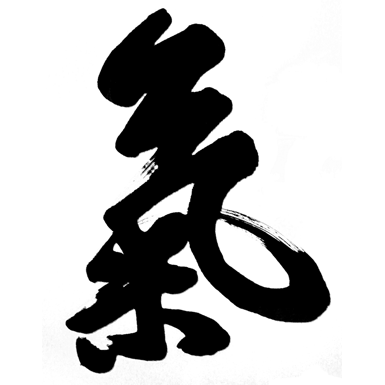
One of the fundamental basis of Chinese Medicine is Qì 氣. Qì (Pin Yin romanization, which is pronounced chee), has been described as “vital energy,” “vital force” or even “universal energy.” It’s sometimes spelled as Chi (Wade-Giles romanization), or Ki (Japanese spelling and pronunciation). In Chinese Medicine there are many different types of Qì, just to name a few: Yuán Qì (Original Qi), Zhēn Qì (True Qi), Yíng Qì (Nutritive Qi) and Wèi Qì (Defensive/ Protective Qi). Many blogposts ago, I wrote about Qì and what its Chinese character means, and many blogposts before that I wrote a little about Wèi Qì as well as how it is key to understanding allergies, such as Hay Fever.

But Wèi Qì is so much more complex than just allergies and immune system. The Chinese character for Wèi  衛  has a few parts: the first radical on the left 彳 chì means “step” and added together with the component on the right it becomes 行 xíng, meaning “to walk.” The middle character component, I recently learnt from a continuing education class, refers to “a guard” or “a man with leather armor.” All together they create “a guard who walks back and forth to protect.” Therefore, Wèi Qì refers to Qi that is always in motion to protect and defend when needed.

As a student in Chinese medical school, we learnt that people who caught colds and flus easily have a Wei Qi deficiency and that the Wei Qi is very connected to the Lung and Spleen Qi. So we would treat the appropriate Acupuncture points and give the famous herbal formula, Yù Píng Fēng Săn (Jade Wind Screen Powder). With the proper diagnosis and appropriate use of this formula, patients often got better within a month or so. One of my strategies during the COVID-19 pandemic was and still is to strengthen the Wei Qi. It can also manifest as bladder symptoms like chronic urinary tract infection UTI, which have often manifested in female patients, being exposed to cold external conditions. But through my practice and observation of different patients over the years, I have come to realize that Wei Qi deficiency is much more than catching colds or viruses easily, chronic UTIs and allergies. I started to realize that some patients would come in reporting how they felt “exposed” emotionally and physically, like they felt unprotected when they went out into the world. They would feel like they were being invaded by others energetically. I started to link this to Wei Qi deficiency and to treat them as such, often times it has worked. Also, by learning to set healthy boundaries in their lives, which is also a manifestation of Wei Qi, in my opinion, this has served to help them feel more secure within their beings.

As a student with my teachers in Tai Ji Quan/ Qi Gong/ Shao Lin Quan we learned to do some techniques of energetic practice they would call Iron Shirt Qi Gong. It is a martial arts method in which, as the name implies, one creates a layer like an iron shirt around the body, to protect against hits and attacks from opponents as well as to strengthen one’s body part to create an iron-hard effect with a punch or a hit. This reminded me of a movie which I watched in university in the 1990s, Iron and Silk, a true story of how Mark Salzman goes to China to teach English and learns Wu Shu, among other things. His master, Pan Qing Fu, is known as Iron Fist. Master Pan spent hours over decades punching a steel block; as such, his fists were as hard as iron. Though he has acted in films, this man’s skill was real, unlike a lot of Hollywood films (there is even one with this name but is not the real deal). This I believe is Wei Qi condensed into the fist. Iron Shirt Qi Gong could be used for martial purposes but I believe it is applicable to everyday life, not for assault but for protection. This, I have come to understand, is Wei Qi being activated with energetic practice.

The cultivation of Wei Qi has to come from many different aspects, not just physically but mentally as well as emotionally and energetically. It is something we need to work with our Bodyminds and not just on a material level. If there is anything that I am sure of, it is that many of the health issues of our time have a lot to do with our Wei Qi deficiency as individuals and as a society. It has been one of my aims to understand Wei Qi better. Even after years of study and practice of Chinese Medicine, I am finding even more depth to the subject. I am still on my journey of exploration into Wei Qi.


Image by PublicDomainPictures on Pixabay
0 Comments

    Elaine Yap

    I am a Chinese Medicine practitioner at ICM, mother of 2 sons, living on my third continent. I'd love to share with you my perspectives on Chinese Medicine, healing, movement, plants, social change and life.

    Archives

    March 2026
    February 2026
    January 2026
    December 2025
    November 2025
    October 2025
    September 2025
    August 2025

    Categories

    All
    Acupuncture Channels
    Attention
    Autumn
    Awareness
    Bipedalism
    Blood
    Blood Stasis
    Bodymind
    Boundaries
    Breath
    Chinese Herbal Medicine
    Chinese Medicine
    Chinese New Year
    Chinese Red Date
    Chinese Wedding
    Courtesy
    Dampness
    Dance
    Dao De Jing
    Daoism
    Death
    Decoction
    Earth
    Emotions
    Endometriosis
    Energetics
    Fascia
    Fire
    Five Elements
    Five Phases
    Food As Medicine
    Ginger
    Gratitude
    Harmonize
    Health
    Heart
    Heat
    Herbal Formula
    Herbal Medicine
    Hiking
    Honey
    Indian Summer
    Jing Jin
    Kidneys
    Large Intestines
    Late Summer
    Licorice
    Life
    Lineage
    Liver
    Liver Qi Stagnation
    Luck
    Lung
    Martial Arts
    Master
    Materia Medica
    Menstruation
    Meridians
    Metal
    Mind
    Mothers
    Mouth
    Muscles
    Nature
    Nourishment
    Numerology$
    Pericardium
    Phlegm
    Plant
    PMS
    Posture
    Protective Qi
    Qi
    Qi Gong
    Rebirth
    Relaxation
    Respect
    Rhythm
    River
    Root
    San Jiao
    Seasons
    Senses
    Shao Lin Quan
    Shen
    Sinew Channels
    Sing
    Singing
    Small Intestines
    Snake
    Spirit
    Spleen
    Stomach
    Summer
    Sweet
    Tai Ji Quan
    TCM
    Tension
    Thoughts
    Three
    Tissues
    Touch
    Transformation
    Triple Burner
    Tui Na
    Upright
    UTI
    Walk
    Walking
    Warmth
    Water
    Wei Qi
    Wu Xing

    RSS Feed

    General inquiry

    By submitting this form, you agree to the privacy policy of Institut für Chinesische Medizin ICM GmbH.
Submit

Institute for Chinese Medicine, ICM GmbH

Falknerstrasse 4 | 4001 Basel
Tel. +41 61 272 88 89 | Fax 061 271 42 64
Email [email protected] ​
WhatsApp +41 77 498 55 25
Opening hours:
Mo. - Fr., 8.00 - 19.00
​Treatment By Appointment Only
Book first visit online
Acupuncture
Tui Na Massage
Chinese Herbs
Qi Gong / Tai Chi
Moxibustion
Physical Therapy
Treatment
FAQ
Documents
Health Insurance
Treatment Rooms

Team
Information
Contact 
BLOG
Treatments by our practitioners at ICM are covered by your Swiss health insurance, if you have a supplement for Alternative/Complementary Medicine
Our practitioners at ICM are all trained in TCM, recognized by the Swiss Organisation for TCM Professionals (TCM-FVS), or have the Swiss Federal Diploma in Naturopathy-TCM (Naturheilpraktiker/in mit eidgenössischem Diplom). 

Falknerstrasse 4 | 4001 Basel | Tel. 061 272 88 89 |
Fax 061 271 42 64 | [email protected]

© 2025 | Impressum und Datenschutzerklärung